Habits · 8 min read
How to Quit Valorant When "Just Uninstall" Has Never Worked
You have uninstalled Valorant a dozen times and reinstalled by midnight. That is not weakness. The ranked grind is built to punish stopping. Here is why it holds on, and a real plan to quit for good.
Contents7 sections
You have probably uninstalled Valorant before. Maybe a dozen times. You deleted it after a tilting loss, felt clean for about a day, and reinstalled it by midnight because the queue was calling. If that loop sounds familiar, here's the first thing to understand: you're not weak, and you're not the problem. Valorant is a competitive ranked game engineered to make stopping feel like a mistake.
This is a practical guide, not a lecture. First we will look at why Valorant is so hard to put down, because you cannot beat a system you cannot see. Then we will get into an actual step by step plan to quit for good, and what the first two weeks really feel like.
This is not a small habit to shake. Third party trackers estimate that tens of millions of people play Valorant every month, and for a competitive slice of them it stops being fun and starts being a reflex. That is not a character flaw. The game is built to pull you back, and the pull you feel is real.
Why Valorant is so hard to quit
Every mechanic that makes ranked exciting is the same mechanic that makes it sticky. The rank rating you chase, the five stack that queues without you, the aim you have spent months sharpening: each one quietly raises the cost of walking away.
These are the same four hooks that make any competitive game hard to leave: variable rewards, sunk cost, social obligation, and identity. We broke them down in detail in why competitive games are engineered to keep you hooked. Valorant simply wires all four of them straight into its ranked ladder.
The ranked grind is built to punish stopping
Ranked is a variable reward machine. You never know exactly how a game will go, or how much RR the result will move, and unpredictable rewards are far more compelling than predictable ones. It is the same schedule a slot machine runs on, pointed at your rank instead of a jackpot.
The uncomfortable part is that this pull is not the same thing as fun. Research separating wanting from liking finds that the systems driving the urge toward a reward are separate from the ones that produce enjoyment when you get it. The two can come apart entirely, which is why you can queue for six hours, not enjoy a single game, and still feel the pull to run one more.
It is worth being precise about the losses, because the popular version of this is wrong. Riot has explained how Rank Rating actually moves: your visible rank is tied to a hidden matchmaking rating, and the system is always dragging one toward the other. In Riot's own words, "If your MMR is higher than your rank, you'll gain more RR on wins than you lose on losses," and if it is lower, "you'll gain less RR on wins and lose more on losses."
So the game is not simply rigged to punish you. But the practical effect on a bad night is worse than if it were. Once you have climbed slightly past where the system thinks you belong, every defeat costs more than a win pays, and no amount of queuing fixes that, because the gap is the whole point. You are grinding against a correction that is designed to win.
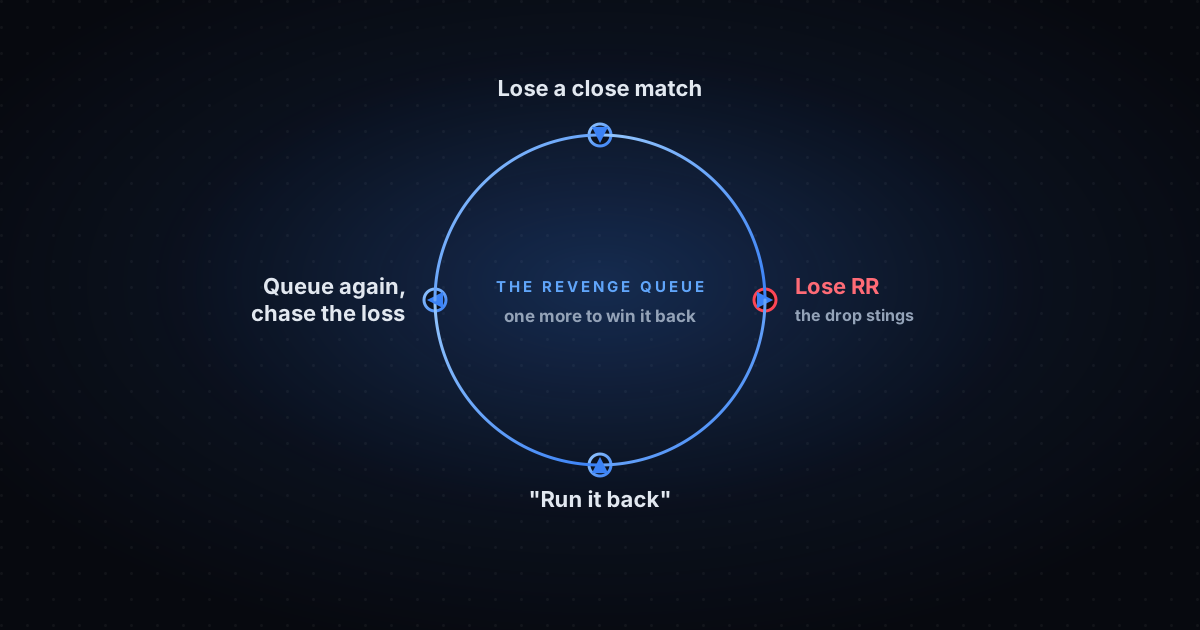
That is what turns a loss into a debt. The number went down, repaying it feels urgent, and the fastest repayment looks like queuing again right now. That is the revenge queue, and it arrives at exactly the moment you should be logging off. Riot runs the same hidden-rating machine in League, where it drives the LP grind and the elo hell myth, which we cover in how to quit League of Legends. Valve runs its own version behind Premier, which is part of why quitting CS2 is harder than it looks.
The urge to queue again is loudest right after a loss. That's not you wanting to play. That's the game asking you to chase a number back.
Why "just uninstall it" never works
Uninstalling deletes the files, not the habit. The client is a two minute download, and your account, your rank, and your friends are all still sitting there waiting. So the game is never really gone, which is why deleting it in a rage at 2am almost never sticks past breakfast. You didn't quit. You added a loading screen.
Playing in moderation usually does not work either, at least not early on. For most people deep in the ranked grind, one game becomes five, because the loop is built to pull you back in. If you could already play just one game and stop, you would not be reading this. In the beginning, a clean break is far easier to hold than a fuzzy limit you renegotiate every night. Moderation is a perfectly reasonable end goal, and the evidence suggests a short break is the most reliable route to it, which we cover in how to play video games in moderation.
How to quit Valorant, step by step
Here is a plan that works with how the hooks actually operate, instead of relying on willpower you have already spent by the end of the day.
- 01
Pick a real quit date and say it out loud. Tell your duo or your stack that you are stopping, and when. Naming it to other people turns a private wish into a commitment you are far less willing to quietly break.
- 02
Make starting a five step decision. Uninstall the client, log out of your Riot account, and remove it from your startup apps. Then put something between you and the reinstall, so it is not one frictionless click at your lowest moment. Our Windows app does this: you set a block yourself, for anything from one to twelve hours, and it closes your launchers as soon as they open. Any launcher blocker will do the job, but pick one before the bad night, not during it.
- 03
Kill the revenge queue rule. Decide in advance that a loss ends the session, it does not justify one more. The RR is already gone. Chasing it back is exactly how a bad night turns into a five hour one.
- 04
Replace the progress bar, do not just delete it. Ranked hands you a number that goes up, and you will miss it. Put something in its place that also shows visible progress: the gym, a skill, a side project, anything with a curve you can watch climb.
- 05
Handle the social hole honestly. If your friends are the reason you queue, tell them what you are doing and ask them not to invite you for a while. Real friends will understand. If a friendship only exists inside the game, that is painful but useful to know.
- 06
Rebuild who you are without the rank. If Valorant has quietly become part of your identity, decide who you are becoming before you quit, so stopping feels like a step toward something instead of only a loss.
- 07
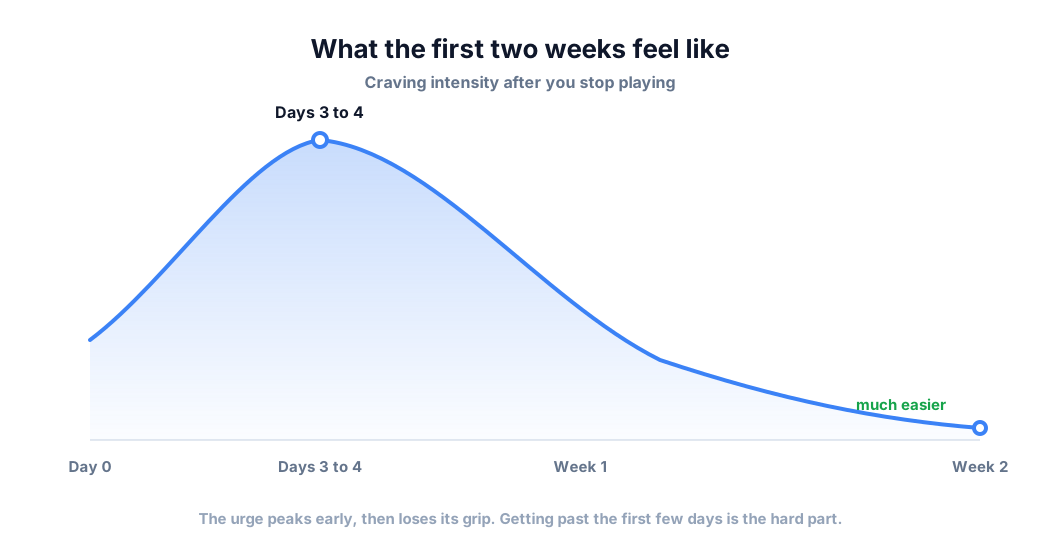
Plan for the hardest day in advance. The urge does not fade in a straight line, it spikes first. Decide now what you will do when it hits, while you are calm, instead of trying to out argue yourself in the moment.
What the first two weeks feel like
Stopping a game you played every day is a genuine adjustment, and the research here is more consistent about the what than the how long. Researchers reviewing 34 separate studies found the effects are most consistently described as irritability and restlessness. That matches what almost everyone reports: a short, sharp stretch of being annoyed at nothing, bored in a way that feels physical, and thinking about queuing constantly.
On timing, the clearest data comes from a 2022 study which followed 69 heavy players through a break from gaming. Most who felt an urge felt it within the first day or two, with only around seven percent reporting it first appearing beyond day three. The hard part shows up fast. That is the bad news and the good news at once, because it means the worst of it is front-loaded rather than lurking somewhere ahead of you.
One honest caveat, since most articles on this will not give you one: the same review also concluded the evidence here is very underdeveloped, and that studies have not properly tracked how those effects fade over time. So treat any confident "day four is the peak, two weeks and you are clear" timeline, including the shape of the curve above, as the pattern people commonly describe rather than something science has actually nailed down.
What holds up across both the research and the anecdotes is the direction. It gets easier, and it gets easier sooner than it feels like it will on day two. Knowing the spike is coming, and that it is front-loaded, is often the whole difference between getting through day four and reinstalling on day four.
When it is about more than the game
If your gaming is tangled up with using the game to escape something heavier, then quitting Valorant is only part of the work. There is no shame in that, and you do not have to do it alone. Talking to someone you trust about what the game is helping you avoid is often the real first step.
The seven steps above are a plan, and plans are easy to write and hard to keep. Closing that gap is what Gaming Reset is for. It turns your answers into a weekly routine of specific missions and keeps your streak in front of you, so week three does not depend on you still remembering why week one mattered.
You do not need to hate Valorant to admit it was built to hold onto you. Seeing the ranked machine clearly is the first honest step. The next one is deciding that your evenings are worth more than a number you have to keep defending.
Frequently asked questions
Why is Valorant so hard to put down?
Valorant is a competitive ranked game built on a variable reward system, the same schedule that makes slot machines compelling. Combine that with the sunk cost of your rank, the pull of a five stack, and an identity tied to how you perform, and it becomes very hard to put down for a lot of players.
How long does it take to quit Valorant?
The hardest part arrives early. In a 2022 study following people through a break from gaming, most who felt an urge felt it within the first day or two, and only around seven percent first felt it after day three. Beyond that, be sceptical of precise timelines: a review of the research found the evidence on how those effects fade over time is still underdeveloped. What people consistently report is that the daily struggle drops off noticeably within the first couple of weeks.
Can I just play Valorant less instead of quitting?
Eventually, maybe. Early on, moderation usually fails, because the ranked loop is designed to turn one game into five. A clean break for a set period is far easier to hold than a vague limit, and you can revisit moderation later from a much stronger position.
Why do I keep reinstalling Valorant?
Because uninstalling removes the files, not the account, the rank, the friends, or the habit. The client is a two minute download, so reinstalling is nearly frictionless. Add real friction while you are calm: log out, tell your friends, and set a block on your launchers for the hours you know are dangerous. Our Windows app has one built in. The point is that your lowest moment should not be one click away from a queue.
What should I do instead of playing Valorant?
Replace what Valorant gave you, not just the time it filled. If it was visible progress, pick something with a clear curve like fitness or a skill. If it was your friends, find a shared activity off the game. The goal is to meet the same need a healthier way.